/f/81631/5000x3750/8612e1a7cf/wio-praatplaat-vfinal-7500.jpg)
Homebound youth in development
The way back to school
:quality(80)/f/81631/800x800/26993ffb37/jeroen-vierkant-visuele-verbinders-animaties-praatplaat-sneltekenen-zakelijk-tekenen-den-haag-caballerofabriek.jpg)
Jeroen van der Liende
:quality(80)/f/81631/3105x3105/8f78e95927/rob-jansen-visuele-verbinders.jpg)
Rob Jansen
Introduction
What if school no longer fits? When you feel angry, anxious, or simply quiet. Overstimulated, overwhelmed, tired of everything that is expected. What if things just aren’t working anymore? So many people have plans and ideas about what would be good for you, but you go silent. And then! Someone listens. Genuinely, curiously, without judgment. Someone who asks: what do you want? Nothing is required, everything is allowed. Every step counts. You are WEL in development.
This visual overview was developed for the WEL project, aimed at getting homebound students moving forward again.
The assignment
The WEL in Development project began in 2021 through the Dienst Uitvoering Onderwijs (Ministry of Education, Culture and Science), in collaboration between Ondersteuningsteam Zorg voor Jeugd (OZJ), Gedragswerk, and Ingrado, to create movement exactly where things had become stuck, or where children were not able to flourish. Four years of results and experience have shown that it works. Development is possible. More and more people know how. The movement is growing. More and more questions from young people are truly being addressed.
The request to Visuele Verbinders was to help gather and safeguard all knowledge and experiences for everyone involved. Several options were discussed, but in the end we chose an interactive visual overview. We wanted a format that could also be understood on its own, even if the visual was not presented live. And above all, one that would inspire people to keep building on the underlying idea.
Process
Just like WEL’s open brief, Visuele Verbinders started with an open assignment: help us communicate the results of the past four years. No fixed medium, though of course within the limits of budget.
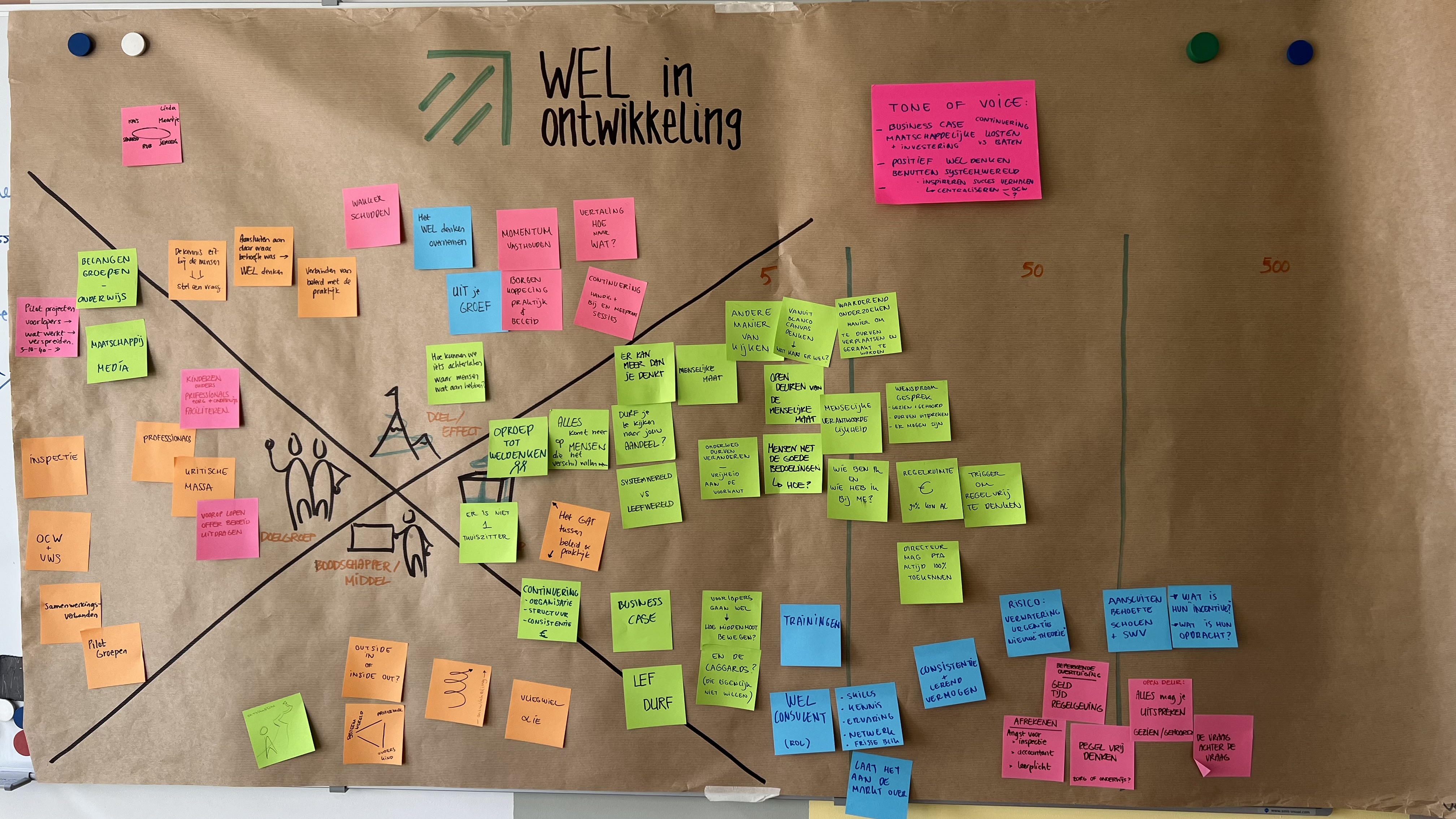
Session 1 - Framing the assignment
We always start by framing the assignment to avoid diving straight into the details. A number of questions are essential here. What is the goal of the product? What effect are you trying to achieve? Do you want to persuade, inspire, or energize? How will the medium be used? Who is your audience, primary, secondary, tertiary, and so on? And finally: what is your message? As we explain in this blog, for us the fit between message and audience is essential for a successful product. Whether it concerns an animation, infographic, visual overview, or even an interactive visual overview.
We unravel that message by clearly distinguishing between the main points and the supporting details. What is truly the essence? If you do that well, the structure of the story almost naturally emerges from it.
Session 2 – Defining the storyline
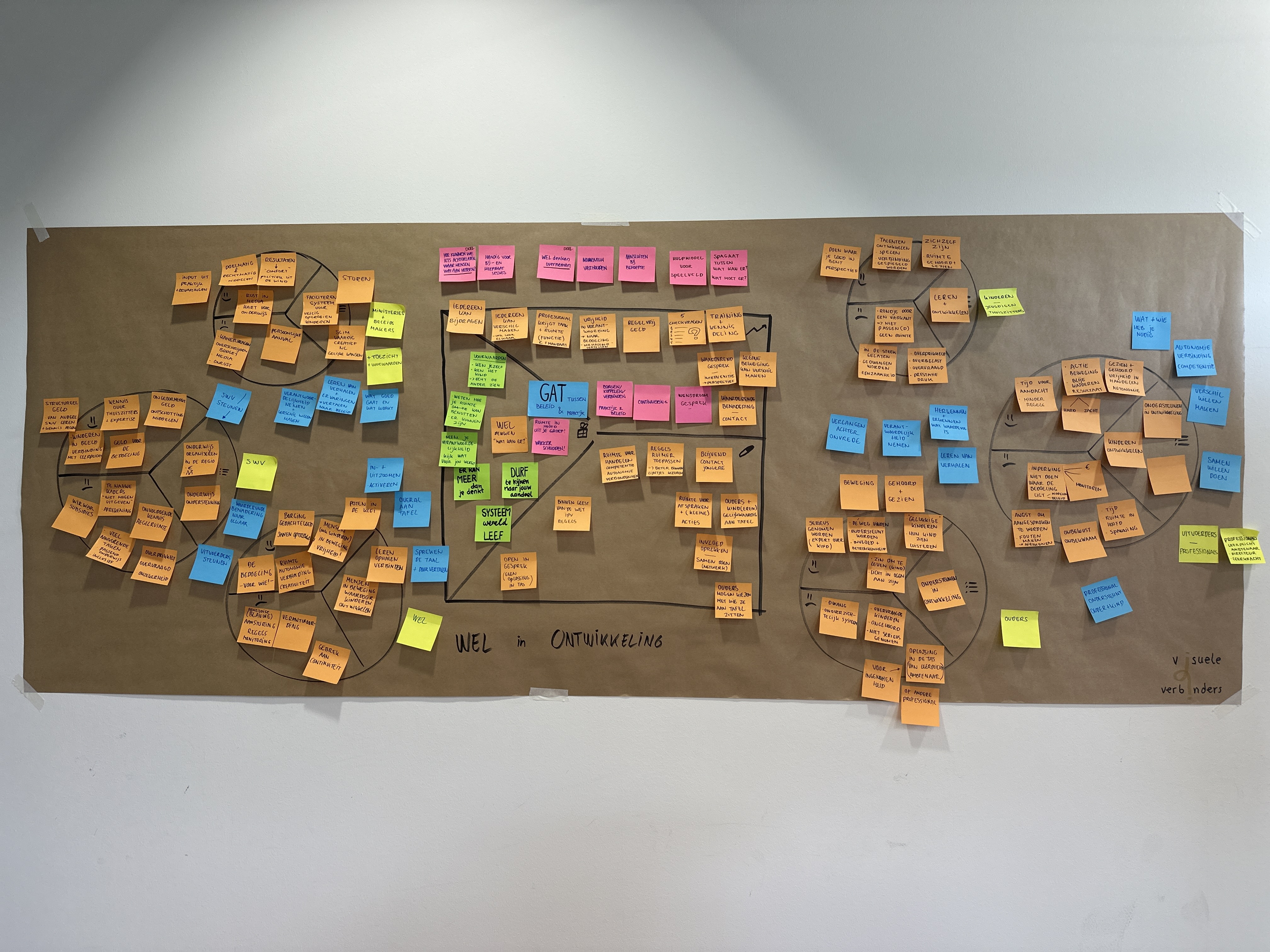
Based on the framing and the core of the story, we continued working on the fit, especially because this process involves so many different target groups. We often do this using the Value Proposition Canvas, which helps us examine how the message connects with the audience. It also helps in finding the right tone of voice.
Session 3 – Translating into visuals
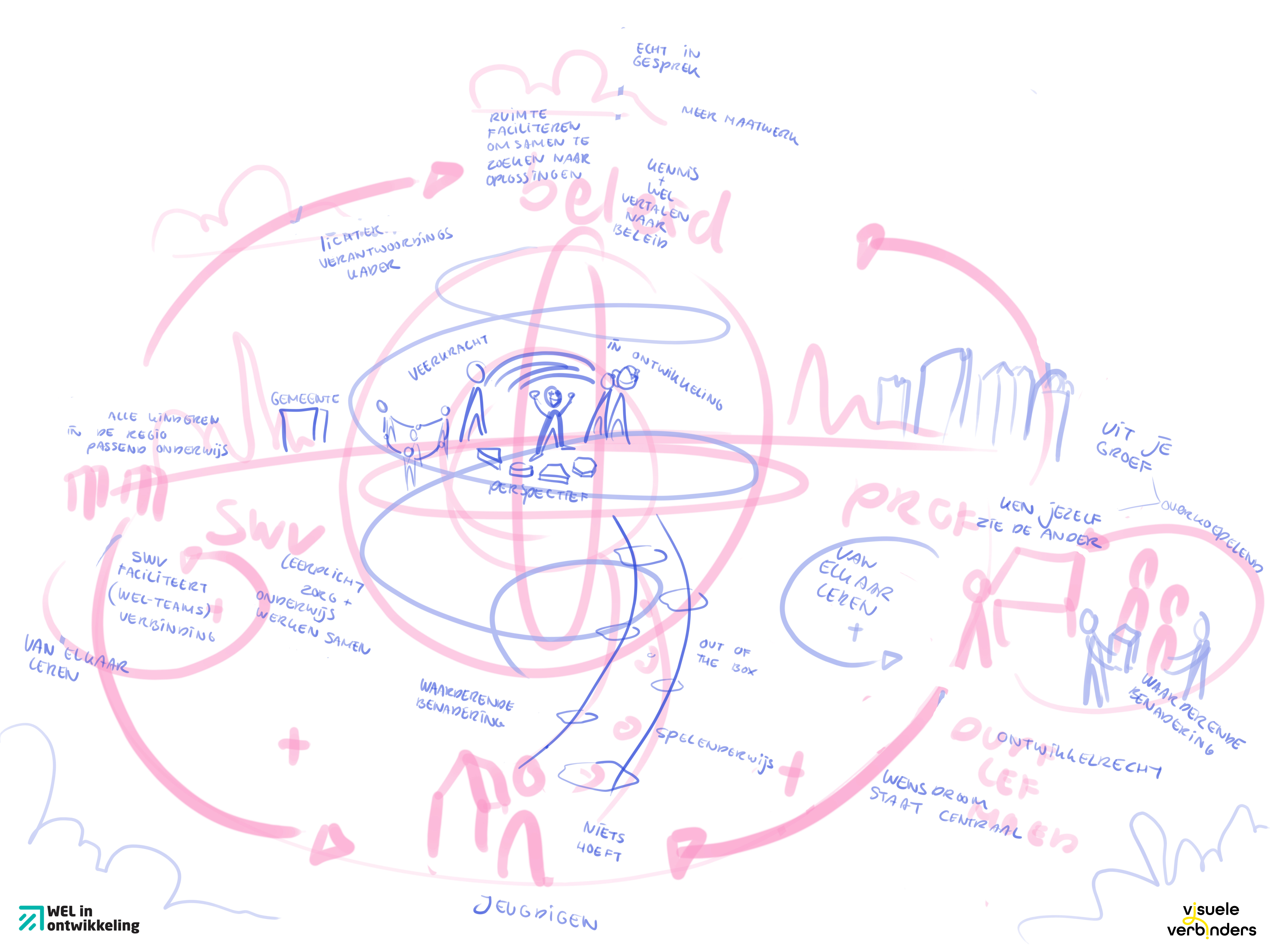
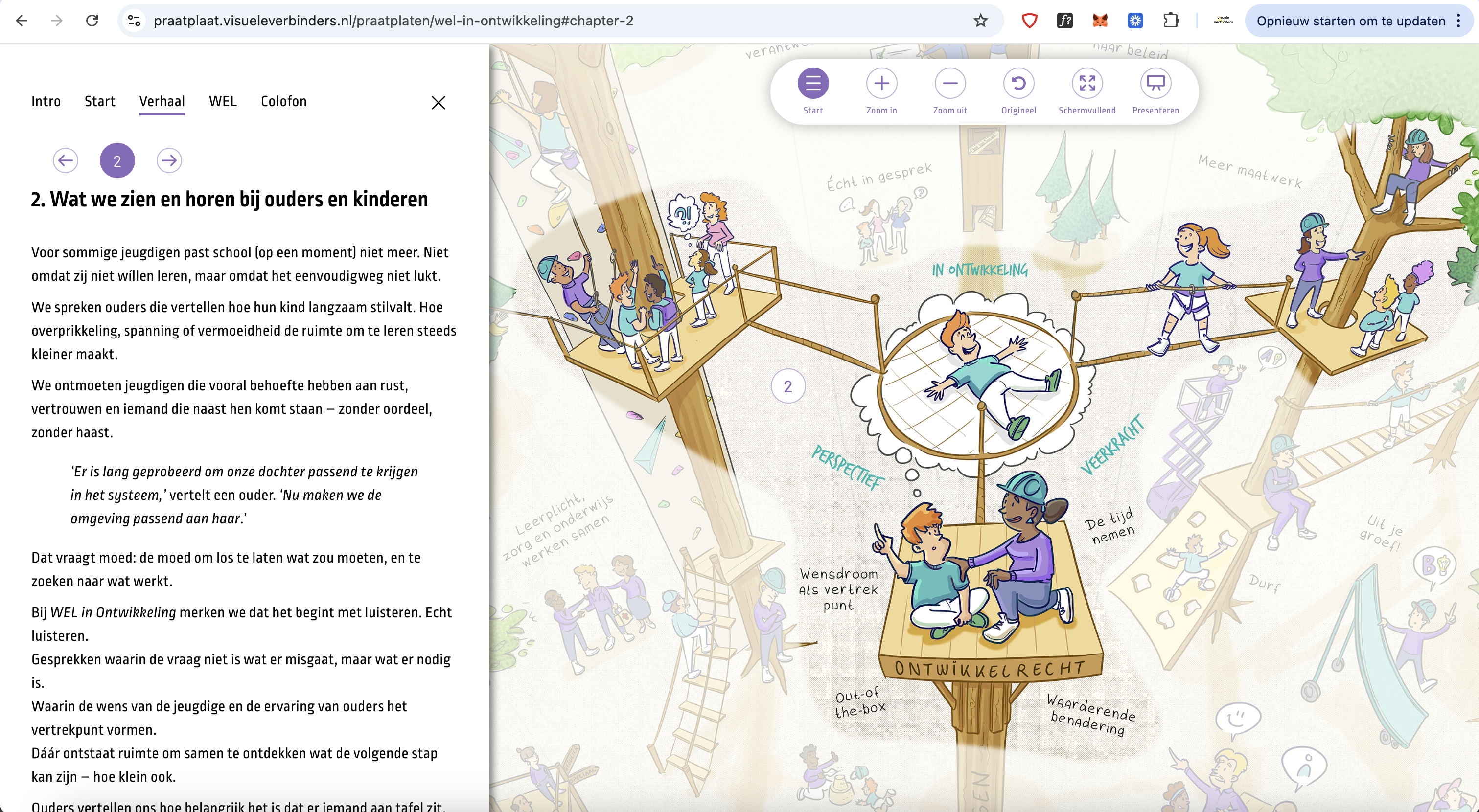
Based on the information gathered, we were able to continue the process. The core of the story is the WEL philosophy, in which thinking differently gives all target groups the opportunity to look beyond the usual path in search of solutions. In the product, we wanted to be able to explain at a glance how this works for each audience. We also wanted people to be able to use the communication tool as a conversation starter, and then discuss together how to put it into practice. That is why we chose a visual overview, with an interactive version as an extension, so the story can also be accessed online and the underlying idea can continue to live on.
With a rough idea of the structure in place, we began translating it into visuals. In doing so, we explored different metaphors, from a jungle to a playground. In the end, the placement of the elements stayed largely the same, but the chosen metaphor greatly enriched the content of the visual.
Session 4 – Refining the details
In the final phase, we discussed the complete concept and, where possible, filled in the visual further together, based on the metaphor.
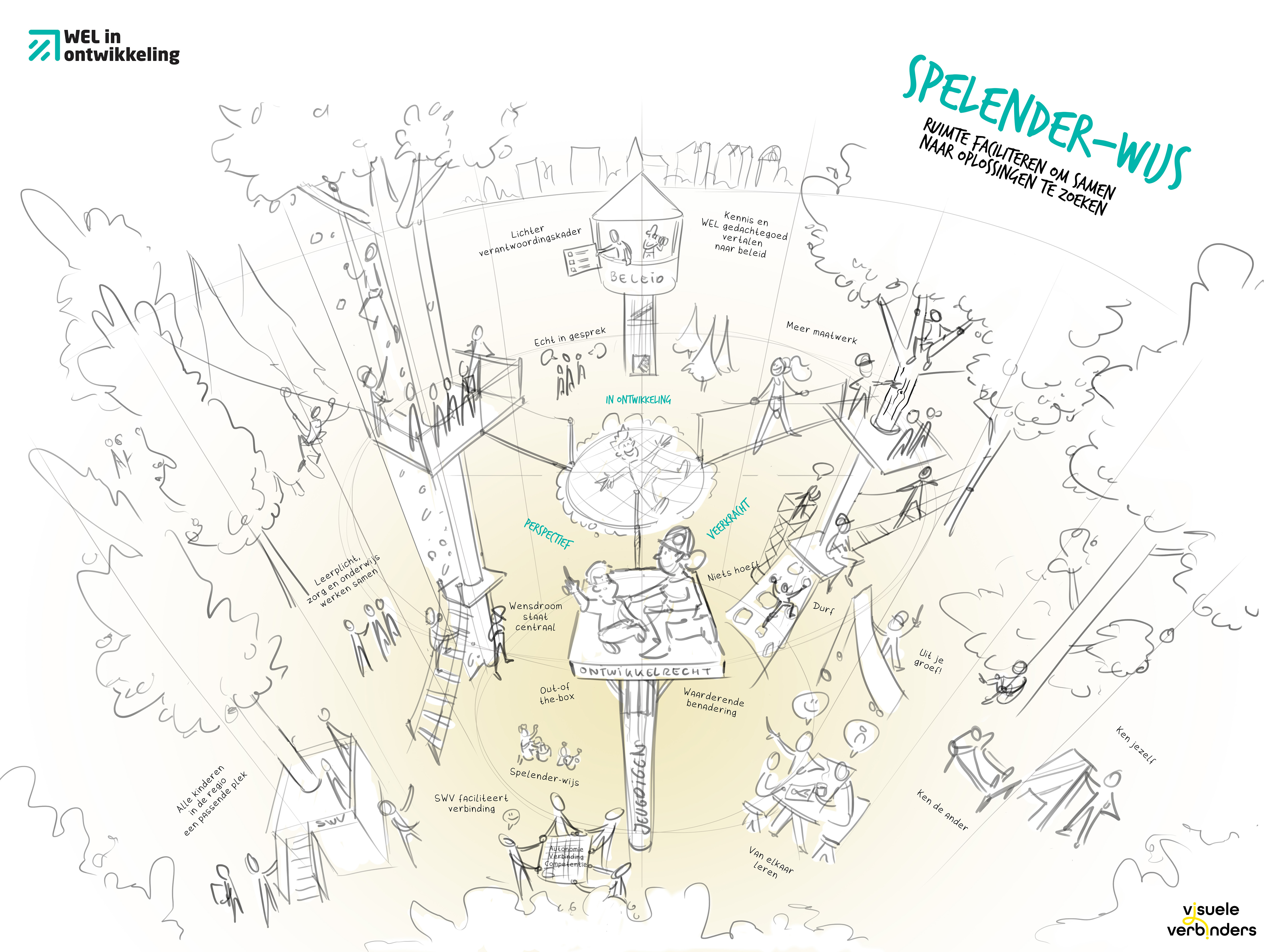
Session 5 – Final polish
After the visual had been fully developed in color, it was tested with a number of partners and collaborative networks. Based on that final input, the final version was created. Finally, the interactive website could be built.
“The right fit between the message of the visual and the target group is essential for a good visual product."
Interactive visual
Click on the link to see the interactive website of the visual: https://www.praatplaat.visueleverbinders.nl/praatplaten/wel-in-ontwikkeling
Want to know more about the process or costs for your bespoke illustration?
Please contact us